Artificial Intelligence and Automation
min Lesezeit
Veröffentlicht am
How Demand Forecasting Revolutionizes Hospitality

Philipp Streich
Business Development Manager

Table of Content
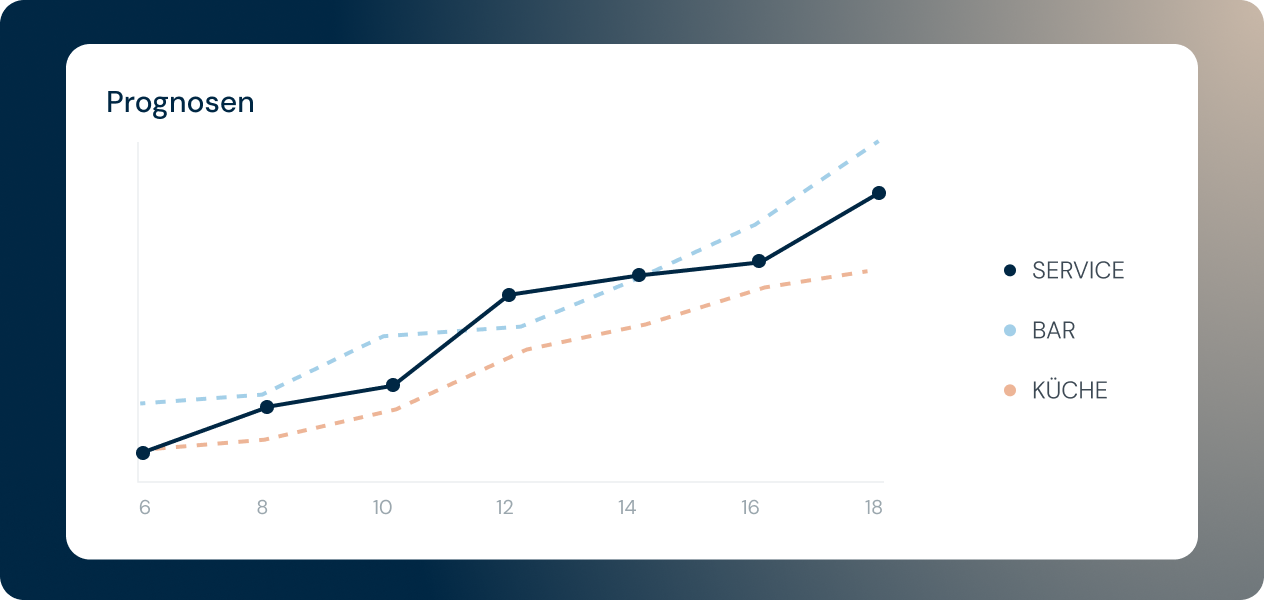
"Why are we understaffed again today?" – Many hospitality and hotel leaders hear this question regularly. Yet the data has long been available – it's just not being used. Those who reliably predict guest flows for the coming weeks plan more efficiently, save costs, and create a better working environment. In this article, you'll learn how demand forecasting works and where the biggest levers lie.
The Power of Prediction
Hospitality has always been about anticipating guest needs. Demand forecasting extends this to operations – knowing not just what guests want, but when they'll arrive.
What Modern Forecasting Captures
Internal Data
- Historical sales and traffic patterns
- Reservation and booking data
- Event calendars
- Promotional activities
External Data
- Weather forecasts
- Local events and activities
- Economic indicators
- Competitor actions
Pattern Recognition
- Day-of-week variations
- Seasonal trends
- Monthly cycles
- Time-of-day curves
Applications Across Operations
Workforce Planning
- Staff to actual demand
- Reduce over/understaffing
- Optimize labor costs
- Improve service quality
Inventory Management
- Order appropriate quantities
- Reduce waste
- Prevent stockouts
- Optimize cash flow
Revenue Management
- Dynamic pricing decisions
- Promotion timing
- Capacity optimization
- Yield management
Forecasting Accuracy Factors
Data Quality
- Complete historical records
- Consistent data capture
- Clean, validated data
Algorithm Sophistication
- Multiple variable consideration
- Machine learning capabilities
- Continuous improvement
Human Input
- Local knowledge integration
- Exception handling
- Forecast review and adjustment
Implementation Path
- Establish data collection practices
- Select appropriate technology
- Build baseline forecasts
- Integrate with operations
- Monitor and refine
Demand forecasting isn't about perfect prediction – it's about being consistently less wrong than gut feeling. Even modest improvements in forecast accuracy translate to significant operational gains: better staffing, less waste, higher revenue. The technology exists; the opportunity awaits.
Talk to an expert
Are you interested in demand-oriented personnel planning? Then book an expert interview.
Share
Lorem ipsum dolor sit amet, consectetur adipiscing elit. Suspend Varius Enim in Eros Elementum Tristique. Duis cursus, mi quis viverra ornare, eros dolor interdum nulla, ut commodo diam libero vitae erat. Aenean Faucibus Nibh et Justo Cursus id Rutrum Lorem Imperdiet. Nunc ut sem vitae risus tristique posuere.
Key Takeaways
.png)
Artificial Intelligence and Automation
Real AI in Shift Scheduling or Just Automation
Many tools promise AI-powered shift scheduling – but often it's just rule-based automation. Learn the difference and what truly matters.
Philipp Streich
29 Jan 2026
•
min read
Blogposts